Note for new subscribers (and reminder to others) Whenever you get an email update of a new post its better to click on the blue link above in your email that is the name of the post, for instance in this post where it says “Holy Semana Santa!!!”. That will take you to the actual website where it is better to view the post than from in your email inbox.
So my last post left me in Manizales, sitting in the rain and trying to make a plan for the approaching Semana Santa religious holiday.
Two days before the beginning of Semana Santa I still had no plans. There were a few places I would have liked to go but the mudslides from all the recent rains had closed several highways and eliminated a lot of my options. So I just decided to take a tour of “Small Town Colombia” and to spend half of Semana Santa in a small town called Quimbaya and the other half in an even smaller town called Filandia. Neither are in any guidbooks and I had not met any travelers who had been to either town, so it was to be a nice off-the-beaten-path adventure.
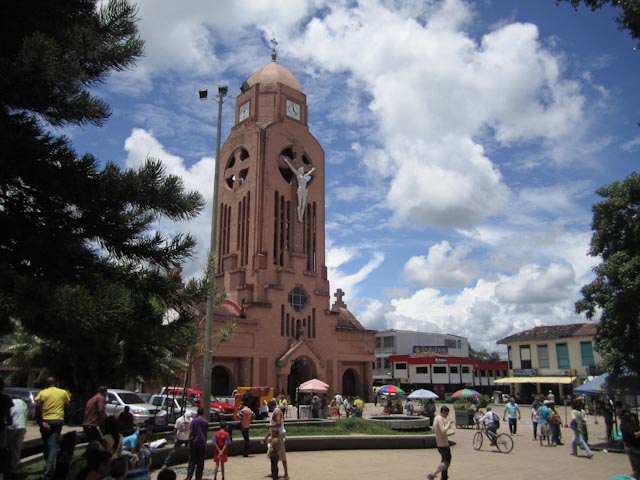
Church on the plaza in Filandia
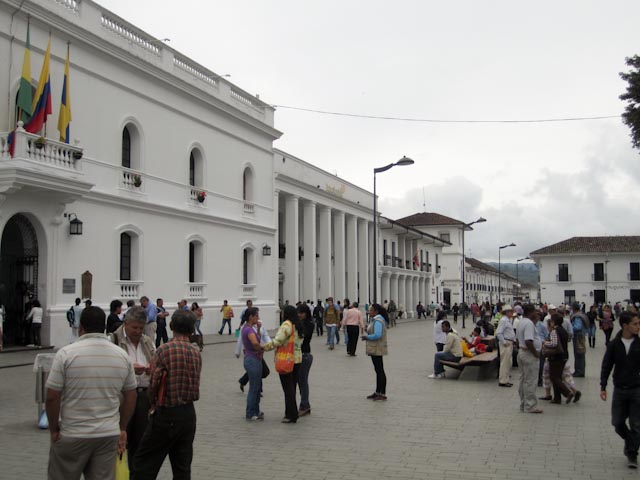
I’ll keep the narrative short but I will say that I made a good choice. It was so nice to be in some small local towns, not a hostel or a gringo in site, but plently of friendly locals. Both towns had some nice charm but Filandia, the smaller of the two (population 7,000) was my favorite. In both towns the locals gathered in happy hourds around the central plaza as if it were the Kaaba at Mecca. The sun came out for the first time in weeks and I spent almost all my time sitting in the plazas, lazily content in people watching. With the holiday from work, the coming together of families, and the recently emerged sun, there was lots of good energy in the air and it felt nice to spent time observing the whole ordeal.
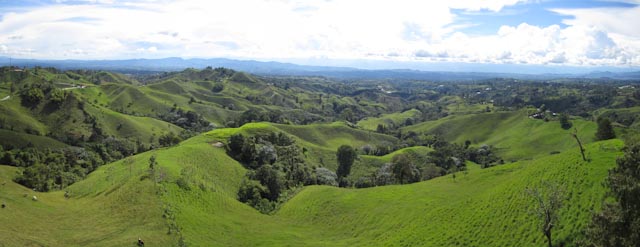
On the plaza in FilandiaThis was the view from a lookout point that was a 10 minute walk form the main plaza in FilandiaThe church on the plaza in Quimbaya
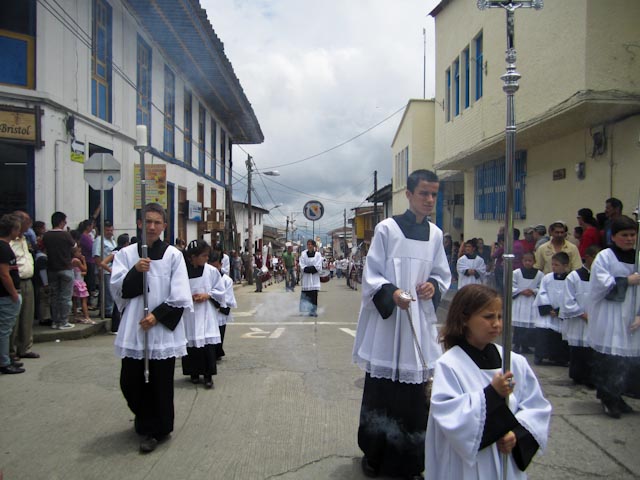
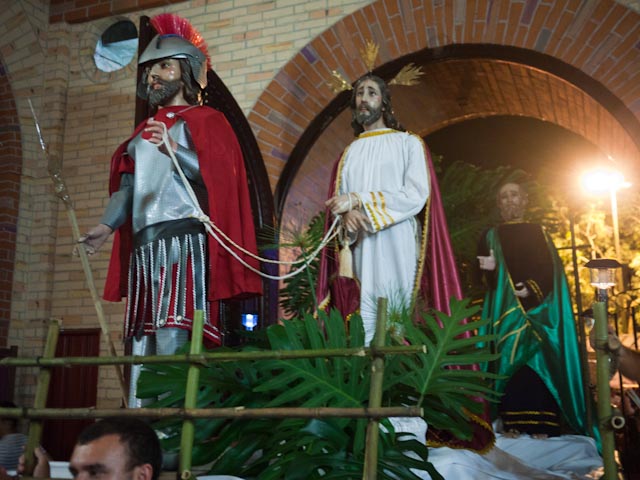
The plazas were always full of vendors selling food and ice cream, sometimes there would be music, and always lots of kids running around playing. Once or twice a day a mass would take place at the church on the central plaza and preceding and/or proceeding the mass there was always a “Procesión”, a procession that always started and/or ended at the church. A mass of people would, somewhat solemnly, walk through the streets of the town following statues of Jesus, Mary Magdalen, The Virgin Mary, and other biblical characters as they were led down narrow streets accompanied by high school marching bands and church officials.
Street procession in FilandiaJesus being led out of the church to make his 3rd appearance in a procession that day.
Photos couldn’t really capture the essence of the processions that were such a big part of the Semana Santa celebrations so I threw together a quick little video of what they were like. Click below to check it out:
After Semana Santa I headed back to Bogota where I planned to regroup with my friend Silvia and head to Santender, another region of Colombia. The bus ride was supposed to be 7 hours but do to mechanical problems (we had to change busses twice) it took 11 hours. Status quo? So I hung out in Bogota for a week, made a plan and took off to Santender where adventures in fossils, colonial towns, edible ants, and “international” nature walks awaited me. Coming soon.
To see more photos (some have descriptions that will explain the story behind them) from Semana Santa click here: More Photos From Semana Santa.
Click below to listen to a very classic Colombian song, it’s from a genre of music called Cumbia that began in Colombia and is now popular all over Latin America. This song is called La Pollera Colora recorded by Pedro Selcedo y Su Orquestra in 1963
So if I didn’t mention it before, my good friend Jr. who I stayed with in Sao Paulo and who helped me buy Coco is a journalist. A month or so after I hit the road with Coco, Jr. landed a job writing for the Folha de Sao Paulo which is largest newspaper in Brazil (Bravo Jr.!) which must make it one of the biggest newspapers in all of Latin America. Well a couple of weeks ago his editor asked him to come up with a story for the Saturday paper, something light and fun for people to read on Saturday morning. He told him about his gringo friend who bought a VW bus and drove it across the whole country and proposed a story about it, his editor liked the idea, checked out my blog, got even more excited, and by the end of the day he had decided to give Jr. an entire page of the Saturday paper for the story! So I went to work answering a slew of interview questions for Jr, and his editor and well…it didn’t run in the Saturday paper but it did run in the Sunday paper! The Adventures of Coco made big news all across the entire country of Brazil! Hits on my blog went through the roof! So below is the article as it ran in the paper. Hope you all have been practicing your Portuguese.
Ok, back to Colombia and picking up where I left off in my previous post. During my adventurous bus ride back to Cali from San Cipriano (if you havent seen the video I made about the adventure you can view it here: The Scenic Route Through San Cirpiano.) I had plenty of time to think about the quickly approaching “Semana Santa”, a holy holiday that would begin in less than a week. For the Colombians, Semana Santa is kind of the equivalent of the American Thanksgiving holiday, but instead of gathering to give thanks for….what exactly are we Americans giving thanks for on Thanksgiving? Indians? Food? Anyways, like thanksgiving, Semana Santa in Latin America is a reason for people to travel from all over the country to spend a long weekend with family. Just replace the turkey and stuffing with religious processions. Statues of Christ and the Virgin Mary being paraded through streets and plazas, the smell of incense mingling with an instrumental version of Simon and Garfunkels “The Sound of Silence” being played by a middle school marching band (Yea, I never quite figured out how that became the official anthem of Semana Santa but I heard it being played and practiced in 3 different cities) .
Everyone travels to be with their families. For backpackers, especially ones that don’t plan ahead like me, Semana Santa is a big pain in the ass. It was the topic of discussion in all the hostels two weeks leading up to it “What are you doing for Semana Santa?”. “I have no idea”, I would reply. The smart ones would reply “Well, you better figure it out soon…we booked a hostel in Popayan 2 months ago”. Very impressive. I did not. The thing with Semana Santa is that if you planned ahead and booked a hostel in one of the cities that is known for its Semana Santa processions it can be a very rich and interesting cultural experience. But since everyone travels that week the busses fill up and/or bus prices skyrocket. So if you didn’t book a hostel in a cool “Semana Santa City”, you’re only options is to pick some other random town or city to hunker down in – wait out the storm. That being the option I was facing, I sat there on my overturned plastic bucket behind the passenger seat of the bus and contemplated my plans.
I decided to first head to Buga. A place that would make every other backpacker or local for that matter ask “Why are you going to Buga?”. I was going because A.) No-one else goes there. B.) I needed a quite place to catch up on photo-editing and blogging. And C.) Because it is known as a bit of a Catholic Mecca in Colombia. It is a SUPER religious town with a huge cathedral that people literally make pilgrimages to visit. I figured it would get me into the Semana Santa spirit. So I returned to Cali, woke up the next morning and headed to Buga.
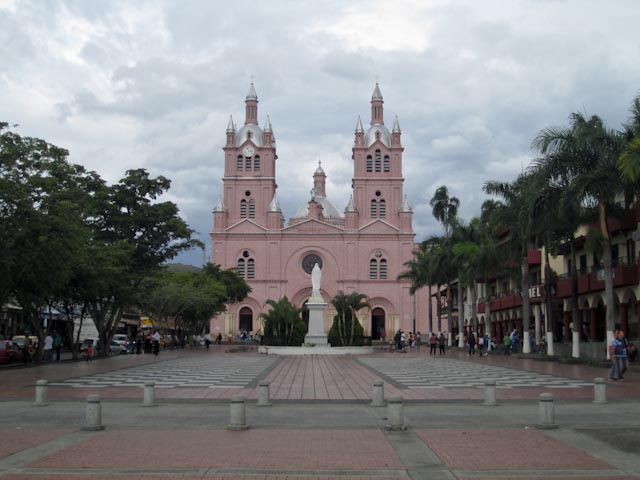
The Cathedral in Buga"Miraculous Store"
I actually enjoyed Buga. It’s a nice little city,the cathedral is indeed impressive and there are dozens of other small churches scattered around the center of town. One of the funniest things was the 40 or so (literally) shops lining the streets near the Cathedral peddling any religious merchandise you can imagine but specializing in the kitsch variety. Want a figurine doll of Saint Barthalameu “Claro señor! Would you like the small one, or the large one? Porcelain or wood? With or without holy water?”. Isnt there a story in the bible about Jesus loosing his temper with the people selling things in front of the temple?
So I killed a couple days in Buga wandering around and catching up with online chores. With 5 days until Semana Santa, my planning had only taken me as far as my next destination, Manizales. I figured from there I would make a plan for Semana Santa and spend some days doing what people do around there, hiking around the Parque Nacional de Los Nevados, or visiting coffee plantations. Instead I found myself trapped in my hostel for 4 days while the wettest winter in the history of Colombia (*literally*) was unfolding beyond the windows of the hostel. Landslides and flooding killed 300 people in two months.
The day before the Semana Santa holiday was to begin I made a spilt second decision, I had to get out of Manizales before I drowned in torrential rains and my own boredom. I jumped on a bus and headed to…Quimbaya?
A very holy update coming soon.
Where, What, When, How Much, How Long, & Personal Recommendations
Bus from Cali to Buga- 3 hours, 7,500 COP
Hostel in Buga- Called *Buga Hostel* $17,000 COP, An American andGerman guy just opened this first and only hostel in Buga…was really nice,they have artesian beer and good pizza. You can walk there from the bus station, it’s about 8 blocks.
Bus from Buga to Manizales- 17,500 COP
Hostel in Manizales- Mountain House Hostel, 18,000 COP. Nice place, I’d reccomend.
Hola todos! So I last left you in Cali, the Salsa Capital of South America. As I said in my last post I’m not much of a Salsa dancer and Cali was not the most attractive city to spend time so I decided to see what other juicy adventure I could sink my teeth into that beckoned in the near vicinity. That is how I came across San Cipriano, a small town that is “supposed” to be a couple hour bus ride from Cali. I read a bit about the place…jungle, tiny, river, hiking, no roads in or out of the town. Yep. I’m in. Was even more exciting because it is definitely off the beaten path with few tourists visiting the town. Karinna, my Chilean travel companion that I had met in Popayán was also interested in coming along so we packed our bags and set off. We met a couple of other travelers at the bus station who were also on their way to San Cipriano, a guy from Spain and a local from Cali. We all ended up becoming friends and sharing in the adventure of exploring this mysterious jungle town. Turned out that us four we were the only outsiders in the whole town (yea…off the beaten path)!
So, I decided to take The Scenic Route to a new level and to make my first official “Scenic Route” video production. I have never made a video before so had to learn a new software program and well, lets just say I have a new respect for those who make videos. I edited the entire thing on a tiny (and not so powerful) little netbook computer and after a couple days of having my eyes glued to the screen…without further adéu, I hope you enjoy the end product:
Where, What, When, How Much, How Long, and Personal Recommendations
Bus To San Cipriano / Arriving– You have to take a bus to a town called Córdoba, 25 min from the coast. One way ticket is $7500 COP (can´t bargain). Will take 2.5-3 hours. Make sure the driver knows to let you off in Córdoba otherwise you will end up in Buenaventurea. When you get off the bus you walk 5 minutes down a steep paved road to reach the train tracks.
Brujita– Defintely dont pay anymore than $5,000 COP one way, you might even get it for less. They say it can be a little more expensive on weekends (and there are also some Colombian tourists who come weekends so if you want the place for yourself go during the week)
Accomodation – We stayed at Hospedaje David. Very basic but acceptable. $10,000 COP per person.
Innertube rental– Half day $3000 COP full day $5,000 COP
Park entrance– The town actually sits in a national park. When you enter you have to pay $1,500 COP
(This post “approximately” covers April 7th through April 12th)
COLOMBIA
FLAG AND FACTS:
The Colombian Flag. The yellow represents gold (Colombia was very rich in gold), the blue represents the two oceans that it borders, and the red is the blood spilled gaining its independence.
FACTS:
Population 45,000,000+ (The 29th largest population in the world and the second largest in South America after Brazil)
60% of all the emeralds in the world come from Colombia (There is a street in Bogota where all the emerald traders are, its really cool to walk around).
Colombia is the second largest fresh cut flower exporter in the world and the 2nd largest exporter of Coffee in the world.
The country is very geographically and ecologically diverse. It has borders on two oceans with amazing beaches, has deserts, huge Andean mountains (the highest is over 18,000 feet [5,493m]), and borders the amazon river.
Costs:
(Colombia uses the Colombian Peso or COP. $1US = 1,775 COP
Beer – $1 in a supermarket, $2.50 in a bar
Colombias economy (the 3rd laregest in LAtin America, the 28th in the world) is generally healthy and growing but the gap between rich and poor is still a very large one. Figures for 2009 indicate that about 46% of Colombians lived below the poverty line and some 17% in “extreme poverty”.
Cheap meal- $2.25
Hostel- $10
Cheap guesthouse- $5.75
Gallon of gas $4.75, (liter- $1.25)
5 hour bus ride- $15 (compared to 18$ in Argentina and $42 in Brazil)
After a hefty dose of culture at the indigenous market in Silvia I felt like a some nature to balance things out, even better if I could get some culture and nature in at the same time. Where to do that? Tierradentro, an archeological site near the tiny town of San Andres. This is definitely an “off the beaten path” adventure (I say that now but I’m sure that in 5 years some backpacker is going to be reading this blog off their WIFI-connected netbook while sitting in a plush hostel in San Andres). For those who make there in the near future though, you wont find any hostels and hardly any tourists for that matter, but you wont be disappointed I promise.
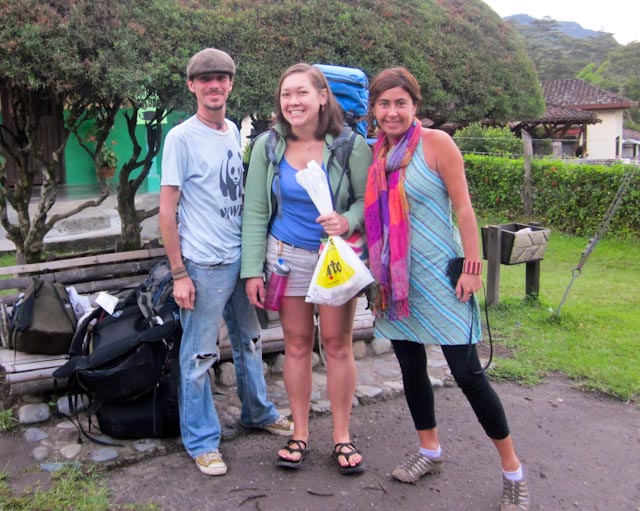
The crew. Me, Lauren, and Karinna
I had made friends with a bunch of people in my hostel in Popyan and a couple of girls, Lauren from USA and Karinna from Chile were also planning to head to Tierradentro. We ended up in the same bus and before we knew it we had become travel buddies. We got a room with three beds in a tiny guesthouse for dirt cheap and as the sun went down we set off to explore San Andres, which took all of 10 minutes considering that the town is TINY! The outstanding feature of the town (aside from the amazing mountains and the archeological ruins that surround it) is a cool little thatched roof mission church that sits across from the local elementary school.
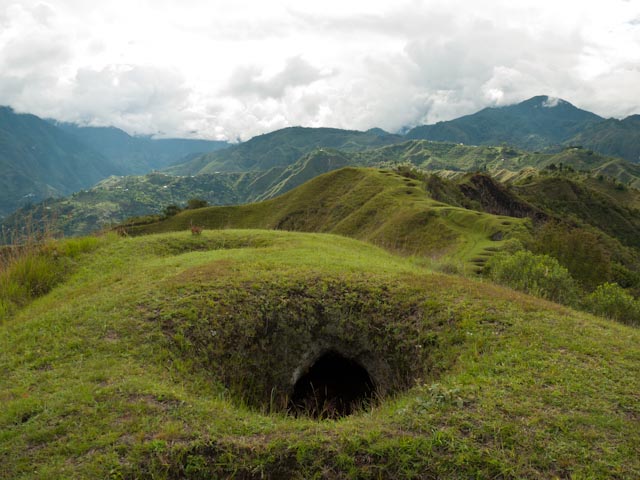
The next morning I wanted to get an early start on exploring the ruins and mountains around the town so I took off walking by myself in the rain hoping that it wouldn’t last too long. The ruins of Tierradentro were also deemed a UNESCO World Heritage Site in 1995. And like San Augustin, Tierradentro is also home to a plethora of pre-hispanic ruins. The ruins in Tierradentro are mostly from the 6th to the 10th century and consist of a series of underground tombs where archeologists excavated human remains, gold, ceramics and other gifts that were entombed along with the dead. There are over 70 of these tombs that you can visit today in the area around San Andres and most are on mountaintops, slopes, and ridges. The Indians who built them dug them straight into the ground with perfect steep spiraling staircases carved into stone that lead into the chambers. Some of the chambers are impressively large (almost 40 feet [12m] across) and have human-like figures carved into the stone columns and intricate paintings all over the walls and ceilings.
As with the stone monuments and ruins of San Augustin, as impressive as they are the tombs of Tierradentro also get a little redundant after you have seen a half dozen of them. But luckily half of the adventure of Tierradentro is in in the journey, not the destination. The tombs lie along a trail system that takes you through the mountains surrounding the town of San Andres, past little fincas and super friendly locals (I have to mention that one of my favorite things about Colombia is the people. They are so friendly and engaging that it makes you excited to be there).
The trail to Alto de Aguacates
Most people do the whole circuit in two days but by 11am the sun was out and it was shaping up to be a beautiful day. Rather than risk the next day being dreary and seeing half of the circuit in the rain, I decided to pick up the pace to try and do it all in a day. I think that besides me and my two travel companions (who were a couple hours behind me) there were only 3 or 4 other tourists in San Andres so I never saw another soul (other than the occasional local) on the trails.
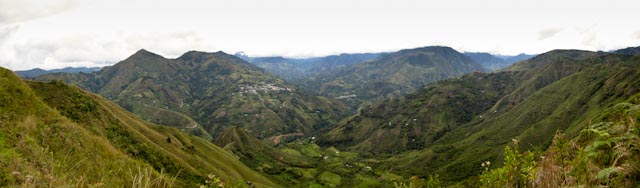
The highlight of the day was reaching the top of the largest mountain ridge in the area. This is where the Alto del Aguacate ruins are found. The other ruins were guarded by people who worked for the arqueoligical park but the hike to the Alto de Aguacate ruins is too far and strunuis for them to send a guard up everyday. So I found myself alone, with a spectacular 360 degree view of the surrounding mountains and valleys, free to wander through dozens of 1,500 year old underground tombs. I will always remember it as one of the highlights of my time in Colombia.
One of the underground tombs on the ridge of the mountain, you can see dozens more in the background.
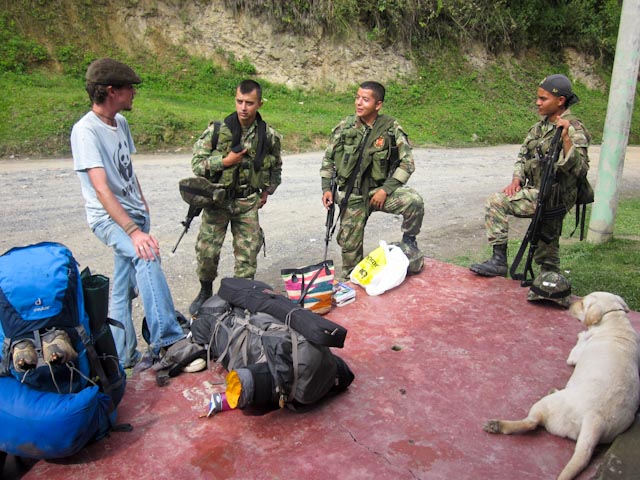
The next morning we hitched a ride with a local farmer to the crossroads (two dirt roads) where the bus would pass to take us back to Popyan. There were a few soldiers who were holding their post there at the crossroads, none of them coule have been more than 20 years old (Military service is obligitory in Colombia). The bus didnt come for 20 minutes so we spent the time chatting with the soldiers who were super nice and answered all of our civilian questions…
Do you actually encounter FARC (Guerillas) around here?- “Yes”
What happens if they see you? Do they try and run? “Never. They dont run, they shoot”
Is those dogs trained to detect drugs? “No, they are bomb sniffing dogs. These hills are full of homemade land mines that the guerillas make.” (Colombia has the seconds highest number of land mines victims in the world)
It was really cool to hang out with the guys and we were all a little bummed when the bus finally arrive. We said goodbye, and jumped aboard for a long bumpy car ride.
Near Downtown Cali
From Tierradentro we made a stop in Popyan to change busses and then headed to Cali. Cali was once considered one of the most dangerous cities in the world. When crime started to fall all across Colombia in the mid 2000’s Cali also became less violent. However, while crime in the rest of Colombia is still decreasing rapidly, in the last couple years Cali has been through a resurge of crime due to a ‘mafia war’ between two ‘neo-paramilitary’ groups. So tourists have to keep to a few small safe areas which isn’t a problem because there really isn’t much to see in Cali anyways that would tempt you to go exploring. Its not a very attractive city. Its main attraction is salsa. Everyone is Cali is obsessed with Salsa dancing. And half the people in my hostel were taking Salsa lessons. Yea yea I should have tried to take some lessons too but I didnt. I did go out one night to some salsa bars though and watched some locals who were pretty damn impressive.
So thats it for now, sorry I kindof rushed through this post, but stay tuned, I´ll make up for it in the next one (I´ve got something good in store). Have fun wherever you are.
Where, What, When, How Much, How Long, and Personal Recommendations
Bus from Popoyan to Tierradentro (San Andrés) – 3.5 hours, $17,000 COP .
San Andrés accomodation- Hospedaje Pisimbalá $10,000 COP per person. For the price I thought it was a great. Basic of course but had hot showers (shared), clean, family owned. 200 meters north of the museums.
Park/museum entrance- $10,000 COP
The hike I did, I stared at “El Parque”, and did Segovia, El Duende, and El Tablón in about 2 hours. This puts you in the town of San Andres…I had lunch there and then tackled Alto Aguacates. Took me about an hour and a half to go up and 45 min to go down…plus whatever time you want to spend up there (note I move fast). All in all I started at 9am and finished around 4pm.
Bus from Popyan to Cali- 3.5 hours $12,000 COP (at the terminal they will try and get you to pay more, its negotiable).
Cali Hostel/Accomodation- Iguana Hostel $18,000 COP. Was fine. I´d reccomend. Nothing amazing but everything you need. Definitely the place if you want to learn Salsa. They offer free lessons and private lessons…everyone there was into Salsa.
If you want to listen to some authentic Colombian Mapalé music while you read click below (Its actually performed by a Mexican artist named Toto La Momposina)
My bus arrived in San Agustín at 8am and I stepped off of it tired and still half asleep. 10 hours overnight, and like an idiot I had forgotten my headlamp (there are no little reading lamps on these busses) and my ipod in my big backpack which was stashed under the bus and the only scenery to look at was the rain drops sliding across the window with a pitch black backround. So it was a boring ride and I was very happy to have arrived.
Silvia had lent me an old 2003 edition of The Lonely Planet Colombia (guide book). The 2003 edition described San Agustín as being “surrounded by FARC [guerilla] activity”, and said that due to the dangers involved in traveling through the region the town had only registered about 1,100 foreign tourists in the previous year (2002). Now there are 5 hostels to choose from the and the town is so quiet and peaceful you could fall asleeop in the main square and no-one would bother you for days. As peaceful as the small square with its colonial church was, I opted for one of the hostels.
That´s the hostel to the right
A couchsurfer had recommended one that was about two kilometers walk down a dirt road outside of the town (a small town of about 30,000 people). The hostel was run by a Colombian hippie woman named Clemencia in her 50’s. The place was beautiful. An eco-hostel surrounded by fields and mountains with a botanical garden and organic vegetable garden. The rooms were made from bamboo and all open to the elements. The one I stayed in was like sleeping in a tree house. So I chatted it up with Clemencia for a while, settled in with my things and took off for the nearby arqueological park which is the town´s main attraction.
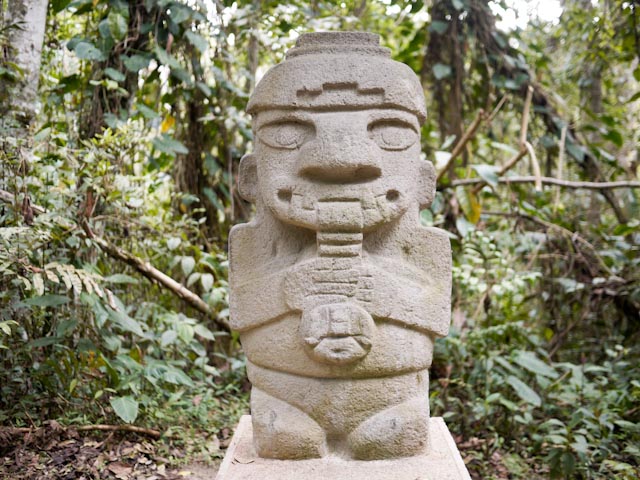
Little is known about the pre-hispanic tribes that inhabited the area around San Agustín from 3300 BC to about the turn of the millenium. However the society that sprung up around the first century AD that flourished until about the 8th century AD left behind hundreds of huge stone monuments which comprise “The largest group of religious monuments and megalithic sculptures in South America” –(World Heritage website) and was declared a UNESCO World Heritage Site in 1995. Most of the statues are located in the arqueologic park, some are in an indoor musuem but most are on display in a series of trails on or near the locations where they were discovered. However, the site officially covers 2,000 square miles and many of the statues are scattered about in the surrounding hills and mountains and are accessible to anyone willing to go seek them out. The statues were pretty impressive and the park gave lots of good information but I kindof felt after a while that once you had seen a couple dozen of these things you had seen them all. So the next day I decided to try something different…to set out to explore the area around San Agustín on horseback.
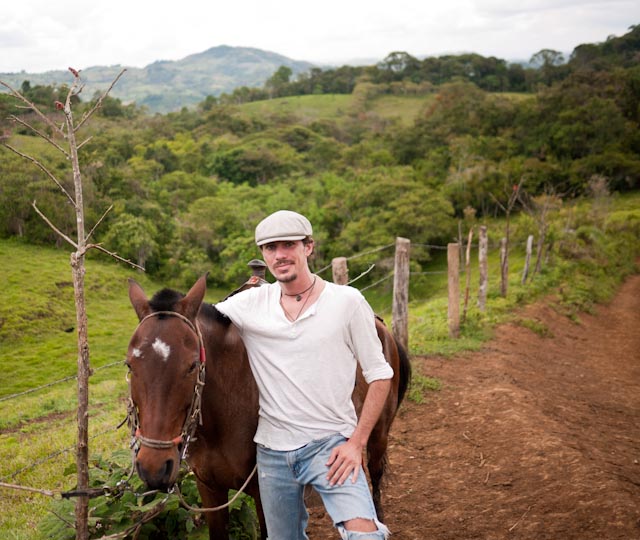
I talked a local guy who gives tours on horseback into letting me take a horse out on my own. He obviously had a good sense of humor because he saddled me up a nice horse named Princess.
Me and Princess
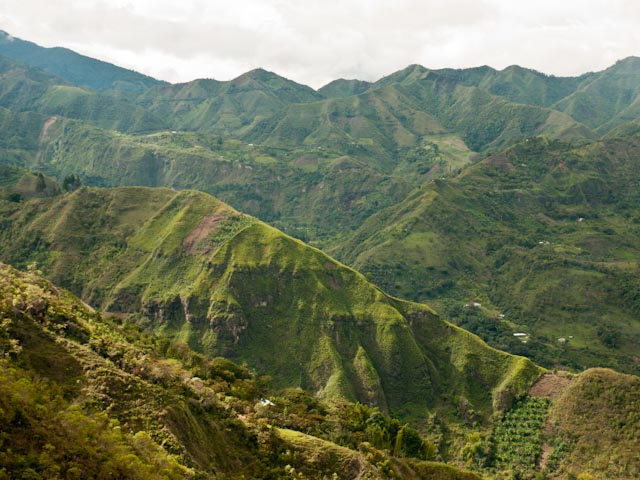
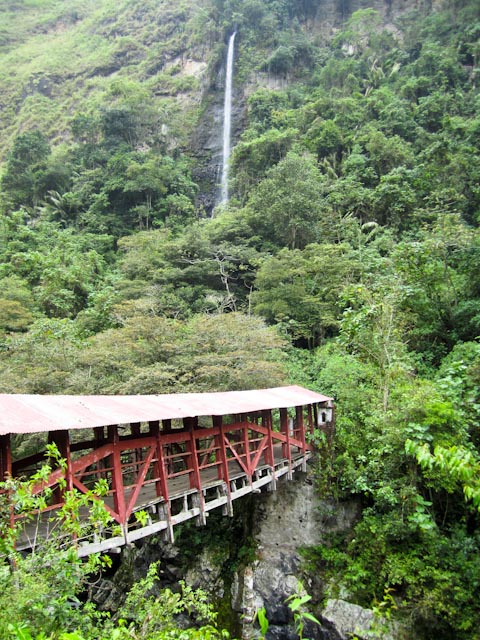
So Princess and I set off to find some old ruins in the surrounding hills. Not quite the Indiana Jones adventure that might come to mind when you think of searching for ancient ruins in Colombia but we had a swell time. Princess was a good animal. Her stubborness and refusal to follow direction suited her just fine. So we galloped and trotted along small country dirt roads in search of ruins. Again, the ruins were cool but got a little redundant, the real treasure was the scenery which was stunning. One of the stone monuments overlooked an amazing canyon that looked like a scene out of Jurasic Park with a river running down the middle, and steep cliffs on either side that looked as if they had sprung leaks right out of their sides with 60 foot wateralls (18m) that poured down feeding into the river. “I wonder if there is a way to hike down into that” I thought.
The two pictures below were both taken standing in front of this ancient monument...they sure knew how to pick good locations to put these things
So Princess and I continued on our path, past fields of coffee and green pastures with dairy cows moseying about. I knew we were close to home when Princess picked up the pace without my encouragement and broke into a trot all on her own.
So the next day, determined to dig into this canyon I had seen, I asked Clemencia if there was a trail that went that way and sure enough there was, El Sendero Alto de los Idolos. So I packed a lunch and headed out just as a light rain was begining to fall. I followed a very narrow foot trail that descended down into the canyon and brought me to a nice little covered bridge over the river. Then up,up, up, past the two waterfalls I had seen the previous day, past coffee plants being cultivated on hillside so steep that I had to wonder how they managed to plant and harvest them. I only saw two people in an hour 20 minutes that I was on this trail, a father with his son of about 8 years old who both smiled and greeted me with a “Buenos dias”. At the top of the otherside, the directions Clemencia gave me became a bit unclear, I was supposed to head to a small town called San Jose where I could catch a bus back to San Augstin, but I made a wrong turn. Instead I landed on a small rural road that I walked on for about an hour and half until it brough me to the main highway where I caught a ride back to town. Not sure what the road to San Jose is like but the one I ended up on was amazing! It took me past miles and miles of coffee plantations, friendly locals, huge canyons, valleys, ranches and small homes.
Welcome to Jurassic Park. Taken from near the bottom of the canyonFrom near the top of the other sideTaken from the dirt road that led to the highway. Those are coffee and banana plants in the foreground.Popayan
I got back to town mid afternoon, packed my things and caught the next bus to Popayán. This was a six hour bus ride on a dirt road bouncing up and down which made for an interesting journey Popayán is a charmig small city with a historical center of all whitewashed buildings, some nice colonial style churches, and not much else to see.
PopayanPotatoes
Luckily though I arrived there on a Monday and had heard that there was a really interesting indigenous market that only happens on Tuesdays at a small mountain town an hour and a half away called Silvia. The indigenous Guambiano indians come here once a week to sell their harvest and pick up supplies before returning to their remote viliages in the mountains. It was definitely not a touristy market (I saw 3 other foreigners there). There was no kitschy artesal goods made for tourists, but rather just bags and bags of potatoes and other produce. There must have been 30 varieties of potatoes for sale. The indian culture is still very much intact in the way they dress and I felt like I was back in the Ecuadorian Andes. The market seemed so authentic and real that I felt that walking around conspicuously snapping photos would have been way too intrusive so I spent a few hours wandering around with my small camera wrapped in a hankerchief taking hipshots so that none of my subjects knew they were being photographed. The end result was about 150 crooked and out of focus photos and about a dozen keepers.
***
***
***
After returning from the market I spent a couple days in Popayan just decompressing and making friends with a bunch of the other backpackers who were staying there, some of whom would join me on my next adventure…Tierradentro. En seguida…..
To see more photos from this leg of the journey, Click Here And remember, some of the photos have descriptions, if you view them as a slideshow you can click “Options” in the upper right and check where it says “Always show title and descriptions”, then go back and restart the slideshow.
Also from now on at the bottom of each post I am adding a section meant for those readers who are travelers and looking for practical travel information.
Where, What, When, How Much, How Long, and Personal Recommendations
Bus from Bogota to San Agustín – 10 hours, $46,000 COP (Bargained down from $52,000).
San Agustín Hostel- Casa del Sol Naciente- $15,000 COP (I recommend)
Horse rental – Arranged at hostel $25,000 COP for 4 hours (He let me take the horse out alone, with more people and a guide I think he said it is $20,000 COP
Trail I Hiked (Alto de Los Indios) from the beginning to where the road reaches the highway is about 3 hours. Once you get to the top of the other side of the canyon and hit the main (small dirt) road, go LEFT for San Jose or RIGHT to go the way I went (which I thought was awesome. From either San Jose or the highway you can catch a bus back to San Agustin.
Bus from San Agustín to Popayán- Almost 7 hours $26,000 COP

















 The Scenic Route Through Life