Colombia Facts, Tierradentro, and Cali

(This post “approximately” covers April 7th through April 12th)

COLOMBIA

FLAG AND FACTS:
The Colombian Flag. The yellow represents gold (Colombia was very rich in gold), the blue represents the two oceans that it borders, and the red is the blood spilled gaining its independence.

FACTS:

  • Population 45,000,000+ (The 29th largest population in the world and the second largest in South America after Brazil)
  • 60% of all the emeralds in the world come from Colombia (There is a street in Bogota where all the emerald traders are, its really cool to walk around).
  • Colombia is the second largest fresh cut flower exporter in the world and the 2nd largest exporter of Coffee in the world.
  • The country is very geographically and ecologically diverse.  It has borders on two oceans with amazing beaches,  has deserts, huge Andean mountains (the highest is over 18,000 feet [5,493m]), and borders the amazon river.

Costs:
(Colombia uses the Colombian Peso or COP.  $1US = 1,775 COP

  • Beer – $1 in a supermarket, $2.50 in a bar
  • Colombias economy (the 3rd laregest in LAtin America, the 28th in the world) is generally healthy and growing but the gap between rich and poor is still a very large one.  Figures for 2009 indicate that about 46% of Colombians lived below the poverty line and some 17% in “extreme poverty”.
  • Cheap meal- $2.25
  • Hostel- $10
  • Cheap guesthouse- $5.75
  • Gallon of gas $4.75, (liter- $1.25)
  • 5 hour bus ride-  $15 (compared to 18$ in Argentina and $42 in Brazil)

After a hefty dose of culture at the indigenous market in Silvia I felt like a some nature to balance things out, even better if I could get some culture and nature in at the same time.  Where to do that?  Tierradentro, an archeological site near the tiny town of San Andres.  This is definitely an “off the beaten path” adventure (I say that now but I’m sure that in 5 years some backpacker is going to be reading this blog off their WIFI-connected netbook while sitting in a plush hostel in San Andres).  For those who make there in the near future though, you wont find any hostels and hardly any tourists for that matter, but you wont be disappointed I promise.
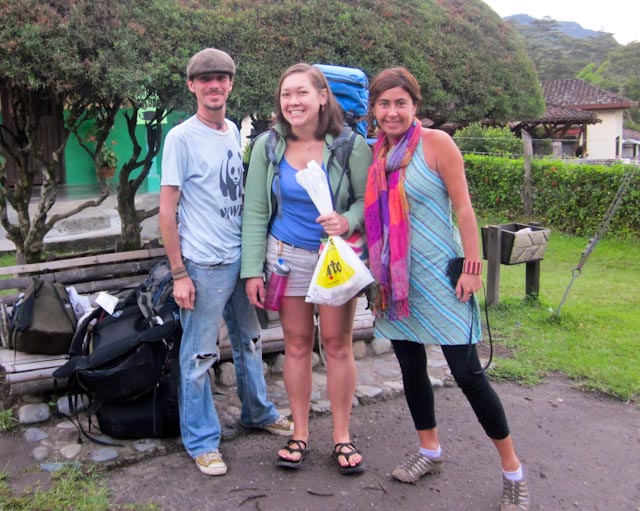
The crew. Me, Lauren, and Karinna

I had made friends with a bunch of people in my hostel in Popyan and a couple of girls, Lauren from USA and Karinna from Chile were also planning to head to Tierradentro.  We ended up in the same bus and before we knew it we had become travel buddies.  We got a room with three beds in a tiny guesthouse for dirt cheap and as the sun went down we set off to explore San Andres, which took all of 10 minutes considering that the town is TINY! The outstanding feature of the town (aside from the amazing mountains and the archeological ruins that surround it) is a cool little thatched roof mission church that sits across from the local elementary school.

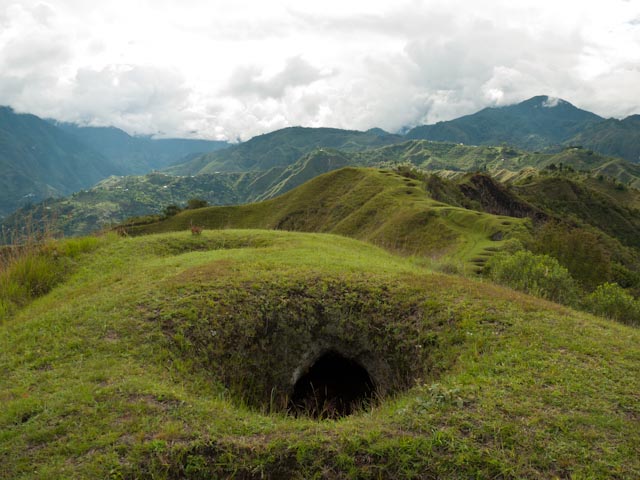
The next morning I wanted to get an early start on exploring the ruins and mountains around the town so I took off walking by myself in the rain hoping that it wouldn’t last too long.  The ruins of Tierradentro were also deemed a UNESCO World Heritage Site in 1995.  And like San Augustin, Tierradentro is also home to a plethora of pre-hispanic ruins.  The ruins in Tierradentro are mostly from the 6th to the 10th century and consist of a series of underground tombs where archeologists excavated human remains, gold, ceramics and other gifts that were entombed along with the dead.  There are over 70 of these tombs that you can visit today in the area around  San Andres and most are on mountaintops, slopes, and ridges.  The Indians who built them dug them straight into the ground with perfect steep spiraling staircases carved into stone that lead into the chambers.  Some of the chambers are impressively large (almost 40 feet [12m] across) and have human-like figures carved into the stone columns and  intricate paintings all over the walls and ceilings.

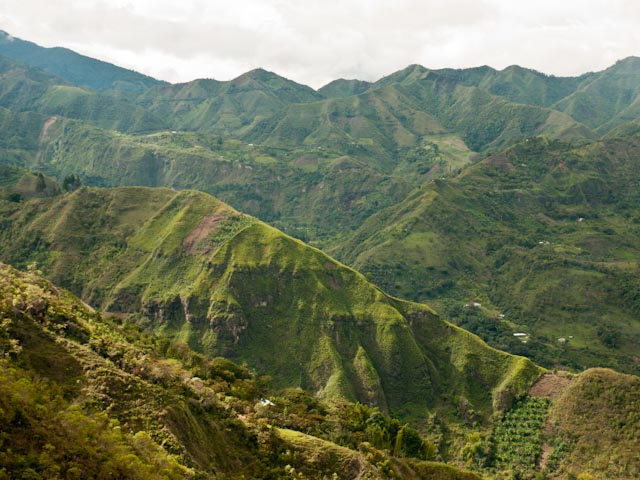
As with the stone monuments and ruins of San Augustin, as impressive as they are the tombs of Tierradentro also get a little redundant after you have seen a half dozen of them.  But luckily half of the adventure of Tierradentro is in in the journey, not the destination.  The tombs lie along a trail system that takes you through the mountains surrounding the town of San Andres, past little fincas and super friendly locals (I have to mention that one of my favorite things about Colombia is the people.  They are so friendly and engaging that it makes you excited to be there).

The trail to Alto de Aguacates

Most people do the whole circuit in two days but by 11am the sun was out and it was shaping up to be a beautiful day.  Rather than risk the next day being dreary and seeing half of the circuit in the rain, I decided to pick up the pace to try and do it all in a day.  I think that besides me and my two travel companions (who were a couple hours behind me) there were only 3 or 4 other tourists in San Andres so I never saw another soul (other than the occasional local) on the trails.

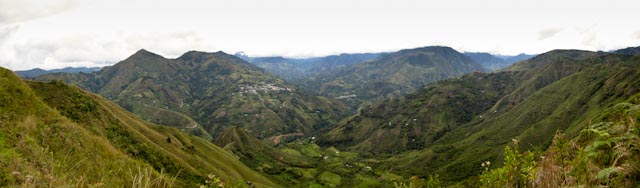
The highlight of the day was reaching the top of the largest mountain ridge in the area.  This is where the Alto del Aguacate ruins are found.  The other ruins were guarded by people who worked for the arqueoligical park but the hike to the Alto de Aguacate ruins is too far and strunuis for them to send a guard up everyday.  So I found myself alone, with a spectacular 360 degree view of the surrounding mountains and valleys, free to wander through dozens of 1,500 year old underground tombs.  I will always remember it as one of the highlights of my time in Colombia.
One of the underground tombs on the ridge of the mountain, you can see dozens more in the background.

The next morning we hitched a ride with a local farmer to the crossroads (two dirt roads) where the bus would pass to take us back to Popyan.  There were a few soldiers who were holding their post there at the crossroads, none of them coule have been more than 20 years old (Military service is obligitory in Colombia).  The bus didnt come for 20 minutes so we spent the time chatting with the soldiers who were super nice and answered all of our civilian questions…

Do you actually encounter FARC (Guerillas) around here?-  “Yes”

What happens if they see you?  Do they try and run?  “Never.  They dont run, they shoot”

Is those dogs trained to detect drugs? “No, they are bomb sniffing dogs.  These hills are full of homemade land mines that the guerillas make.” (Colombia has the seconds highest number of land mines victims in the world)
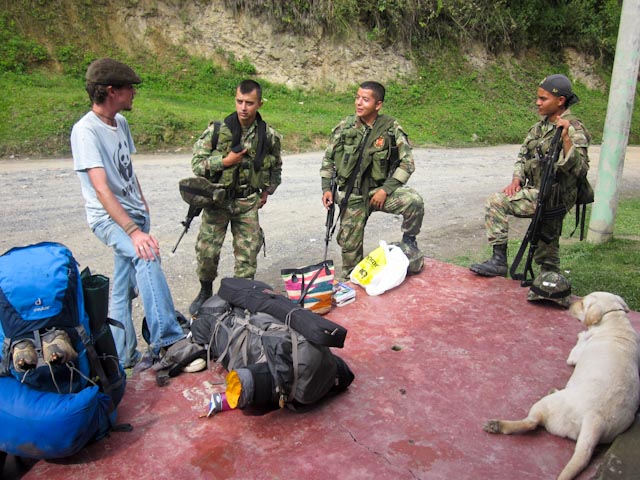
It was really cool to hang out with the guys and we were all a little bummed when the bus finally arrive.  We said goodbye, and jumped aboard for a long bumpy car ride.

Near Downtown Cali

From Tierradentro we made a stop in Popyan to change busses and then headed to Cali.  Cali was once considered one of the most dangerous cities in the world.  When crime started to fall all across Colombia in the mid 2000’s Cali also became less violent.  However, while crime in the rest of Colombia is still decreasing rapidly, in the last couple years Cali has been through a resurge of crime due to a ‘mafia war’ between two ‘neo-paramilitary’ groups.  So tourists have to keep to a few small safe areas which isn’t a problem because there really isn’t much to see in Cali anyways that would tempt you to go exploring.  Its not a very attractive city.  Its main attraction is salsa.  Everyone is Cali is obsessed with Salsa dancing.  And half the people in my hostel were taking Salsa lessons.  Yea yea I should have tried to take some lessons too but I didnt.  I did go out one night to some salsa bars though and watched some locals who were pretty damn impressive.

So thats it for now, sorry I kindof rushed through this post, but stay tuned, I´ll make up for it in the next one (I´ve got something good in store).  Have fun wherever you are.

To see more photos CLICK HERE.

Where, What, When, How Much, How Long, and Personal Recommendations

  • Bus from Popoyan to Tierradentro (San Andrés)  – 3.5 hours, $17,000 COP .
  • San Andrés accomodation- Hospedaje Pisimbalá $10,000 COP per person.  For the price I thought it was a great.  Basic of course but had hot showers (shared), clean, family owned.  200 meters north of the museums.
  • Park/museum entrance- $10,000 COP
  • The hike I did, I stared at “El Parque”, and did Segovia, El Duende, and El Tablón in about 2 hours.  This puts you in the town of San Andres…I had lunch there and then tackled Alto Aguacates.  Took me about an hour and a half to go up and 45 min to go down…plus whatever time you want to spend up there  (note I move fast).  All in all I started at 9am and finished around 4pm.
  • Bus from Popyan to Cali- 3.5 hours $12,000 COP (at the terminal they will try and get you to pay more, its negotiable).
  • Cali Hostel/Accomodation- Iguana Hostel $18,000 COP.  Was fine.  I´d reccomend.  Nothing amazing but everything you need.  Definitely the place if you want to learn Salsa.  They offer free lessons and private lessons…everyone there was into Salsa.

San Agustín, Popayán, & the Silvia Market

This Post Covers April 1st Through April 6th

If you want to listen to some authentic Colombian Mapalé music while you read click below (Its actually performed by a Mexican artist named Toto La Momposina)

My bus arrived in San Agustín at 8am and I stepped off of it tired and still half asleep.  10 hours overnight, and like an idiot I had forgotten my headlamp (there are no little reading lamps on these busses) and my ipod in my big backpack which was stashed under the bus and the only scenery to look at was the rain drops sliding across the window with a pitch black backround.  So it was a boring ride and I was very happy to have arrived.

Silvia had lent me an old 2003 edition of The Lonely Planet Colombia (guide book).  The 2003 edition described San Agustín as being “surrounded by FARC [guerilla] activity”, and said that due to the dangers involved in traveling through the region the town had only registered about 1,100 foreign tourists in the previous year (2002).  Now there are 5 hostels to choose from the and the town is so quiet and peaceful you could fall asleeop in the main square and no-one would bother you for days.  As peaceful as the small square with its colonial church was, I opted for one of the hostels.

That´s the hostel to the right

A couchsurfer had recommended one that was about two kilometers walk down a dirt road outside of the town (a small town of about 30,000 people).  The hostel was run by a Colombian hippie woman named Clemencia in her 50’s.  The place was beautiful.  An eco-hostel surrounded by fields and mountains with a botanical garden and organic vegetable garden.  The rooms were made from bamboo and all open to the elements.  The one I stayed in was like sleeping in a tree house.  So I chatted it up with Clemencia for a  while, settled in with my things and took off for the nearby arqueological park which  is the town´s main attraction.

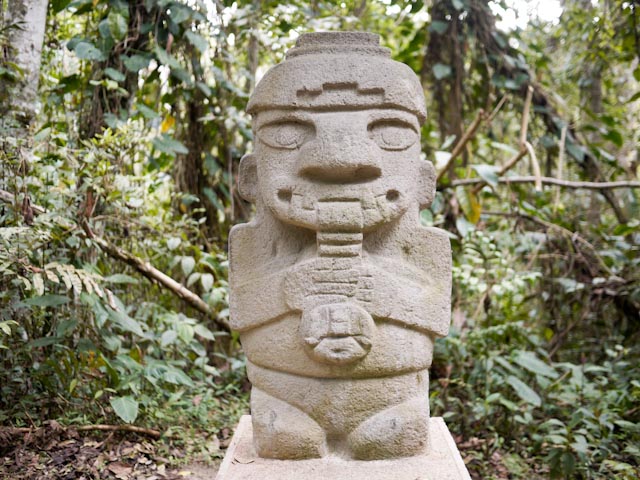
Little is known about the pre-hispanic tribes that inhabited the area around San Agustín from 3300 BC to about the turn of the millenium.  However the society that sprung up around the first century AD that flourished until about the 8th century AD left behind hundreds of huge stone monuments which comprise  “The largest group of religious monuments and megalithic sculptures in South America” –(World Heritage website) and was declared a UNESCO World Heritage Site in 1995.  Most of the statues are located in the arqueologic park, some are in an indoor musuem but most are on display in a series of trails on or near the locations where they were discovered.  However, the site officially covers 2,000 square miles and many of the statues are scattered about in the surrounding hills and mountains and are accessible to anyone willing to go seek them out.   The statues were pretty impressive and the park gave lots of good information but I kindof felt after a while that once you had seen a couple dozen of these things you had seen them all.  So the next day I decided to try something different…to set out to explore the area around San Agustín on horseback.

I talked a local guy who gives tours on horseback into letting me take a horse out on my own.   He obviously had a good sense of humor because he saddled me up a nice horse named Princess.

Me and Princess

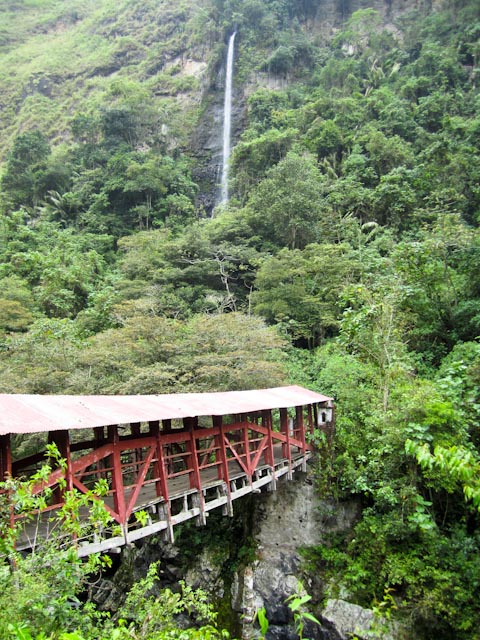
So Princess and I set off to find some old ruins in the surrounding hills.  Not quite the Indiana Jones adventure that might come to mind when you think of searching for ancient ruins in Colombia but we had a swell time.  Princess was a good animal. Her stubborness and refusal to follow direction suited her just fine.  So we galloped and trotted along small country dirt roads in search of ruins.    Again, the ruins were cool but got a little redundant, the real treasure was the scenery which was stunning.  One of the stone monuments overlooked an amazing canyon that looked like a scene out of Jurasic Park with a river running down the middle, and steep cliffs on either side that looked as if they had sprung leaks right out of their sides with 60 foot wateralls (18m)  that poured down feeding into the river. “I wonder if there is a way to hike down into that” I thought.

The two pictures below were both taken standing in front of this ancient monument...they sure knew how to pick good locations to put these things

So Princess and I continued on our path, past fields of coffee and green pastures with dairy cows moseying about.  I knew we were close to home when Princess picked up the pace without my encouragement and broke into a trot all on her own.

So the next day, determined to dig into this canyon I had seen, I asked Clemencia if there was a trail that went that way and sure enough there was, El Sendero Alto de los Idolos.  So I packed a lunch and headed out just as a light rain was begining to fall.  I followed a very narrow foot trail that descended down into the canyon and brought me to a nice little covered bridge over the river.  Then up,up, up, past the two waterfalls I had seen the previous day, past coffee plants being cultivated on hillside so steep that I had to wonder how they managed to plant and harvest them.  I only saw two people in an hour 20 minutes that I was on this trail, a father with his son of about 8 years old who both smiled and greeted me with a “Buenos dias”.  At the top of the otherside, the directions Clemencia gave me became a bit unclear, I was supposed to head to a small town called San Jose where I could catch a bus back to San Augstin, but I made a wrong turn.  Instead I landed on a small rural road that I walked on for about an hour and half until it brough me to the main highway where I caught a ride back to town.  Not sure what the road to San Jose is like but the one I ended up on was amazing!  It took me past miles and miles of coffee plantations, friendly locals, huge canyons, valleys, ranches and small homes.

Welcome to Jurassic Park. Taken from near the bottom of the canyon
From near the top of the other side
Taken from the dirt road that led to the highway. Those are coffee and banana plants in the foreground.
Popayan

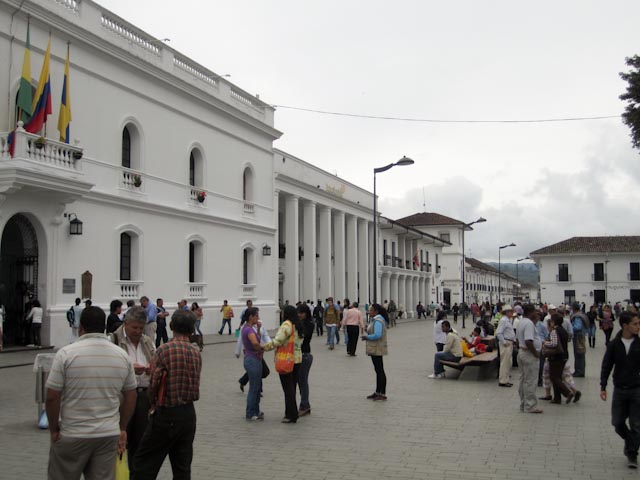
I got back to town mid afternoon, packed my things and caught the next bus to Popayán.  This was a six hour bus ride on a dirt road bouncing up and down which made for an interesting journey Popayán is a charmig small city with a historical center of all whitewashed buildings, some nice colonial style churches, and not much else to see.

Popayan
Potatoes

Luckily though I arrived there on a Monday and had heard that there was a really interesting indigenous market that only happens on Tuesdays at a small mountain town an hour and a half away called Silvia.  The indigenous Guambiano indians come here once a week to sell their harvest and pick up supplies before returning to their remote viliages in the mountains.  It was definitely not a touristy market (I saw 3 other foreigners there).  There was no kitschy artesal goods made for tourists, but rather just bags and bags of potatoes and other produce.  There must have been 30 varieties of potatoes for sale.  The indian culture is still very much intact in the way they dress and I felt like I was back in the Ecuadorian Andes.  The market seemed so authentic and real that I felt that walking around conspicuously snapping photos would have been way too intrusive so I spent a few hours wandering around with my small camera wrapped in a hankerchief taking hipshots so that none of my subjects knew they were being photographed.  The end result was about 150 crooked and out of focus photos and about a dozen keepers.

***

***

***

After returning from the market I spent a couple days in Popayan just decompressing and making friends with a bunch of the other backpackers who were staying there, some of whom would join me on my next adventure…Tierradentro.  En seguida…..

To see more photos from this leg of the journey, Click Here And remember, some of the photos have descriptions, if you view them as a slideshow you can click “Options” in the upper right and  check where it says “Always show title and descriptions”, then go back and restart the slideshow.

Also from now on at the bottom of each post I am adding a section  meant for those readers who are travelers and looking for practical travel information.

Where, What, When, How Much, How Long, and Personal Recommendations

  • Bus from Bogota to San Agustín – 10 hours, $46,000 COP (Bargained down from $52,000).
  • San Agustín Hostel- Casa del Sol Naciente- $15,000 COP (I recommend)
  • Horse rental – Arranged at hostel $25,000 COP for 4 hours (He let me take the horse out alone, with more people and a guide I think he said it is $20,000 COP
  • Trail I Hiked (Alto de Los Indios) from the beginning to where the road reaches the highway is about 3 hours.  Once you get to the top of the other side of the canyon and hit the main (small dirt) road, go LEFT for San Jose or RIGHT to go the way I went (which I thought was awesome.  From either San Jose or the highway you can catch a bus back to San Agustin.
  • Bus from San Agustín to Popayán- Almost 7 hours $26,000 COP
  • Popayán Hostel- Hostel Trail- $18,000 COP (Recommended)
  • Bus from Popayán to Silvia (one way)- 1.5 hours, $5,000 COP

From the Beaches of Brazil to the Clouds of Bogota

(This post covers my arrival in Bogota on March 22nd until my departure for the South of Colombia on March 31st.)

If you are a subscriber and received this in your email account (always) click on the post title above to view the post from the webpage.

*****

The best moments in traveling alone cannot be captured with a camera.  These are the moments where the feeling of being alive, the gratitude for being alive, for having the opportunity to see what you are seeing, to experience what you are experiencing…all this is racing through you and your eyes shine with the victory of having found it.  Maybe you are standing on the top of a mountain you just climbed, all around you is deathly quiet, there is no one else but you and you can see in every direction.  The sun is cutting through parts of the clouds leaving patches of land bathed in soft golden sunlight.  You feel like shouting at the top of your lungs but hesitate, thinking to yourself…”What a cliché scene from a movie”.  Then… “What do I care!?”  And you you let that feeling of being alive, all that energy out across the mountaintops in one big shout and it doesn’t feel like a trite cliché, it feels natural.  And you think to yourself “They have those scenes in movies because that is human, that is who we are.”

Maybe you are hanging out of the open door of a train as it passes through a small village.  The wind is blowing through your hair and bits of dust and sand are into your eyes.  The tracks thump underneath you click-clank, click-clank, click-clank, click-clank, and you feel the vibration under your feet.  The sun is hot on the side of your face and beads of sweat are collecting dust.  You have been traveling for days straight and need a shower but this only makes you feel more alive.  The train passes through little villages that are so different from what you know at home that your home seems like another planet, one that is far away.  Little kids run to the train tracks to wave at you as it passes by.

No one is there to take a picture of you hanging out of that boxcar on the train, but if they were would the exhilaration be captured in the faint smile that rests so naturally on your face?  Would you see it in your eyes?

*****

My midnight arrival in Bogotá was met with the quick realization that I had made a classic Gringo blunder. I had not even stopped to think that Bogotá, the third-highest capital city in the world (after La Paz and Quito) which sits at 2,625 meters (8,612 ft), might not be the tropical wonderland of Brazil that I had just arrived from. I stepped off the plane in short sleeves and flip-flops and walked out of the airport into a cold and rainy night with people wearing big coats and scarves! (deja-vu of my arrival in Amsterdam from Kenya in November of 2001). I woke up the next morning to more rain and more cold, put on shoes and socks for the first time in months, and set out to explore. That first day I didn’t wander too far from the hostel but I loved the city from the very beginning.

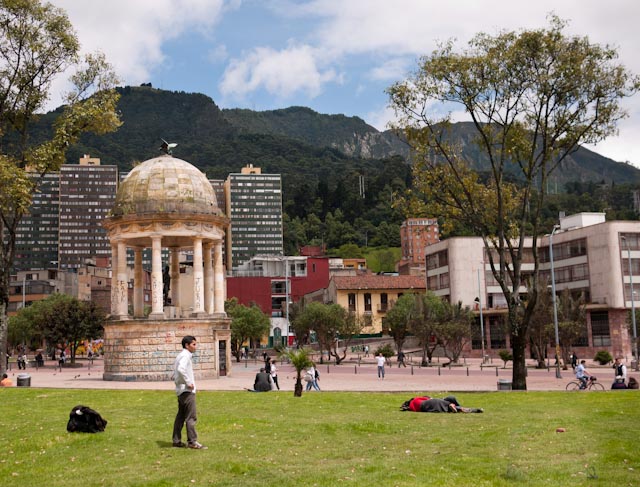
Park near the Candelaria area, the whole city is surrounded by mountains (as you can see in the background)

To me at least it has a very European feel, one reason is that like Buenos Aires there is more culture in the air, you see more bookstores, more libraries, more art museums, cathedrals that are hundreds of years old, and some nice architecture. Because of its intellectualism and abundance of culture Bogotá is often referred to as “The Athens of South America”.

Inside the Cathedral
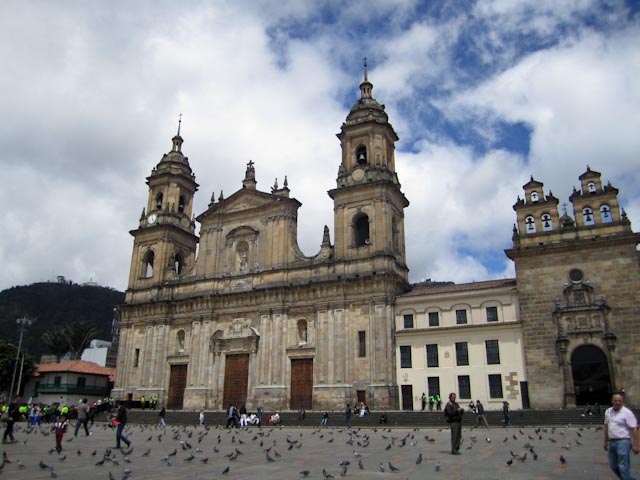
Cathedral on the main plaza (Plaza Bolivar)

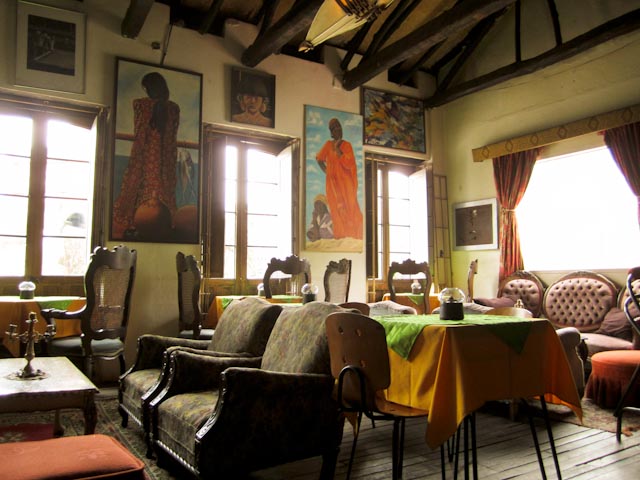
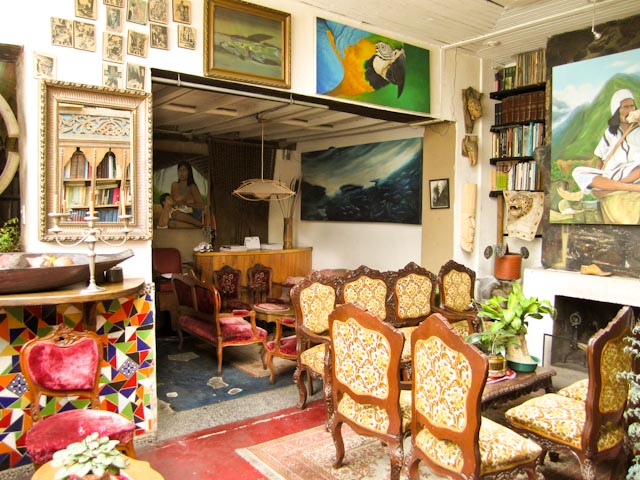
There are also lots cafes and restaurants that have a cool artsy look and feel to them, a little funky and with character, not boring cookie cutter establishments. Here are a couple of pictures of a really cool cafe that had lots of little rooms full of art and old furniture and funky artifacts:

I also found the city to be rather organized, clean, and modern. The architecture is an interesting mix but there is quite a lot of British architecture that gives you the feel that you are walking around on some old university campus. Almost every building you see is made of brick, which can get redundant but helps keep the city looking well-kept (So many other Latin American capital cities have buildings with cheap concrete facades that stain black and look real dingy and depressing.) It later dawned on my that the dreary weather (my only complaint about Bogotá) also probably helped give the feeling of being in Europe.

I had been looking forward to my arrival in Bogotá for a long time, for years Iguess you could say.  Because it was not just visiting a new city but I was going to

Me, Silvia, and my friend Scott in Cartagena 2005

get to visit an old friend who I had not seen in years. Silvia is a Colombian biologist from Bogotá who I lived with and worked with as a volunteer in Costa Rica years ago in 2003. The last time I had seen here was during a short trip I made with a friend to Cartagena in 2005 but we had always maintained a close bond. (in 2005 Colombia was still a pretty dangerous place to travel so we didn’t wander too far from Cartagena).

I had thought about and talked about a reunion in Colombia with Silvia for the last 6  years and it was everything I had imagined it would be. And so I had a best friend, a tour guide and a home for the rest of my time in Bogotá that would last about a week and half. She took me on a tour of her university where she is studying for her masters, it was one of the coolest campuses I have seen. We went to art museums, a flamenco show, saw a movie, visited markets and churches and walked hundreds of blocks through the city. Her boyfriend Flavio is one of the nicest guys I have met and was also always there to show me around and answer all my questions about the city.

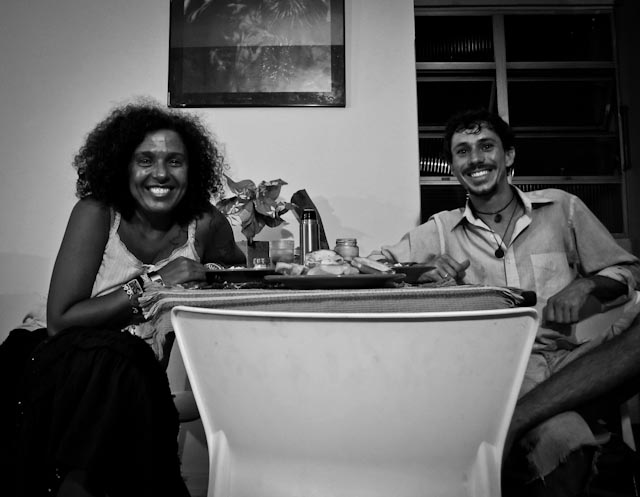
Me, Silvia, & Flavio...Dinner at Silvias apartment.

I also got to spend lots of time with Silvia’s mom who is an amazing person and accepted me with open arms and I was even invited to a family dinner where I got to meet the rest

Trail through the reserve

of her family. The next day her mom and her boyfriend invited us to go to an ecological reserve near Bogotá that is located in a cloud forest. It was my first introduction to a landscape that I would see again and again as I travel through Colombia…huge mountains and steep cliffs all covered in lush greenery with patches of clouds and mist settling into the nooks, crannies, and crevasses of the green land. It is a landscape that I have fallen in love with.

View from the mirador (lookout point) that we hiked to
Silvia and me at the mirador

So…one question that is probably on lots of readers minds…”What are you doing traveling through Colombia by yourself? Isn’t it full of drug lords, FARC, paramilitary, and kidnappers? Isn’t it really dangerous?” Well, yes Colombia is still the worlds largest producer of cocaine (although production is declining), and yes there is still FARC and paramilitary in Colombia. As for kidnappings, in 2000 there were roughly 3,500 kidnappings, by 2006 that number fell to 680, the last report in 2009 was 172! Thats a decrease of about 95%.  As for the guerillas and drug lords and drug violence…where that was all once out in the open, an aggressive military campaign has pushed all the guerillas to basically “no-mans land”, far from any place where a tourist might want to visit. The result: I have felt much safer traveling around Colombia than I have in most other Latin American countries. Now that Colombia has been made safe for tourists it is in the beginning of boom, hostels are popping up everywhere, backpackers are as common as in Peru or Ecuador, and for the first time in decades locals are also getting out of their cities, taking to the roads, and exploring their own country. Former president (from 2002-2010) Álvaro Uribe Vélez and his extremely aggressive military campaign against the FARC is the man responsible for restoring order in Colombia.

So, it was in high spirits and with a thirst to dig into this new treasure trove of culture and nature that I set off to discover Colombia. Silvia had school obligations so couldn’t join me on my first leg of the trip that would take me through the South of the country but she promised to travel some with me in the North East later in the month. And so I boarded a night bus for a 10 hour trip from Bogotá to San Augustin where I would wake up to a new town, new people and a new adventure…..

“To awaken quite alone in a strange town is one of the pleasantest
sensations in the world.” – Freya Stark

To see more photos click here:  More photos of Bogotá

Also, I have added a new page to the Blog.  Look towards the top under the picture of the volcano, where it says “Past Adventures”.  This has a very brief history of some of my past world rambling as well as some some short slideshows of photos.

Goodbye Brazil and Cheers to Belem, DETRAN, and New Family.

This Post covers March 2nd-March 22nd

(If viewing in your email inbox click above

on the title of the link to bring you to the webpage)

So arriving in Belem was like coming home, thanks Roselis, the jewel of the Amazon, and her friends Leandro and Simoni. Roselis was to be my couchsurfing host for my first few days in Belem and as soon as she opened the door of her apartment it was like walking into the home of an old friend. Her passion for life, her intelligence, and her mischievous which all shone in a twinkle in her eyes. She has a PHD in Biology and works for The Nature Conservancy forming relationships with Amazonian tribes to assist them in using their political influence to help conserve land (Yea…pretty cool).

Roselis and me

It was so nice to meet someone who I shared a connection with, someone who propelled conversations into new realms and who was funny as hell!  And as if it wasnt enough of a gift to meet Roselis, as part of the package deal I was introduced and welcomed into her group of intimate friends that functions like a family. The first night I was there we cooked a big dinner and were joined by Simoni, her best friend who lives across the street and owns a pizzaria down  on the same block. We spent the night drinking wine and beer, sampling rum and salt from around the world, talking and laughing. And thus began my time in Belem, which was to last a week and a half but ended up lasting 3 weeks!

Belem was founded in 1616 and was the first European colony on the Amazon.  I actually thought the city was rather charming.  Huge mango trees line the side of the busy sidewalks dropping gifts on the heads of unsuspecting pedestrians (It’s known as the Cidade das Mangueiras (city of mango trees).

Sidewalk lined with mango trees

The culture of the Amazon is everywhere, in the food, the markets, the music and of course the weather which was hot and rainy.  Speaking of markets, Belem is  home to the “Ver-0-Peso” market founded in 1688 which claims to be the oldest continually operating market in The Americas.  The market is a kolidoscope of colors and smells and sounds.  With hundreds of stalls selling everything from Amazonian fish the size of a full grown man to crazy fruits that look like they belong in imagination of Dr. Seuss.  The market also has a huge section of traditional herbal medicines, potions, and concoctions meant to cure or cause just about any ailment or emotion you can think of.  Want to put a hex on your landlord?  Just sprinkle some of this green stuff on his doormat.   Gastritus?  Chew on this stick.  Want that girl to fall in love with you?  Just eat some of this pickled dolphin vagina (seriously).  All this is taken VERY seriously.  To the locals this is no novelty and they are quick to share stories with you (in all seriousness) about…”That one time when my best friends ate some macoca root to help him sleep and he didn’t wake up for 6 days!”

I took bunch of photos of the market so if you want to take a photographic tour of Belem click here:  Ver-O-Peso Photo Tour (I added to descriptions to some of the photos)

The fishing port near the market

So why the hell was I in Belem for three weeks, a city that most travelers skip all together or at the most spent 2 or three days? One word, a word so great and powerful that it is really 3 words…DETRAN…also known at the Department of Transportation.  I will spare everyone the details…details which have been smothered by liters of tropical heat induced sweat, levels of frustrations nearing psychosis, and stacks and stacks of bureaucratic papers. The jest of it is that I had to sell Coco.

I had a buyer…a couple of coushurfers who wanted to drive her back down south and then into Argentina, Bolivia, and Peru. But before I could sell the car to them I had to have it legally put into my name (I had been driving it under the grace period given when you buy a new car). This experience turned out to be one of if, not THE most challenging and frustrating things I have ever been faced with in over 30 months of my life I have spent traveling.  My patience was undergoing tests that resembled shock therapy.

Just one quick story that doesnt even scrape the surface of the whole ordeal but must be told….So on my fourth (out of 7 trips) to DETRAN, I was still naive enough to think that “today would be the day”. I drove the 40 minutes in sweltering heat to DETRAN where I got my “inspection” of the car. I failed. Why? Because my SPARE tire was “too worn”. Yep. Defeated for the day (DETRAN closes early) I made a plan for the next day. Next day I make the treck again but stop at a tire place near DETRAN and strike a deal with the guy. I’ll pay for a new tire, he “lends” it to me to pass my inspection, I return the tire two hours later and he gives me 90% of my money back. Deal. I walk out of the place with my new tire and in the 10 minutes that passed while this deal was being struck, a gigantic crack appeared on my windshield. Just like that. Crack. No way I’ll pass the inspection with that so I set off looking for a place that replaces windshields. I’m sweating like a pig driving around for 2 hours till I find a place. $200 and 3 hours later and I have a new windshield. Of course now DETRAN is closed. Next morning I was up ready for battle, head to the car and…Its been broken into! Everything was stolen, GPS, my lucky hat, the spare change from the ashtray, and…the spare tire I was supposed to return. Ok, stay calm, that’s life. Gotta go to DETRAN, gotta get this done. Jump in the car and head out. I go 5 minutes before I realize I need gas and pull into a station. I reach for the key to the gastank (always kept in the ashtray) and of course it disappeared with the spare change. So now im out of gas and have no way to put gas in the car.  Did I ever make it to DETRAN that day?  Yes I did (with the help of locksmith). Did I sort out all the paperwork? Lets just say that the paperwork should be all sorted out sometime this week. Yes, literally this week. I arrived in Belem on March 2nd, am currently in Colombia and have been since March 22nd and it is STILL not complete. But alas, those are the challenges of traveling, always testing one’s patience, persistence, and ability to adapt.

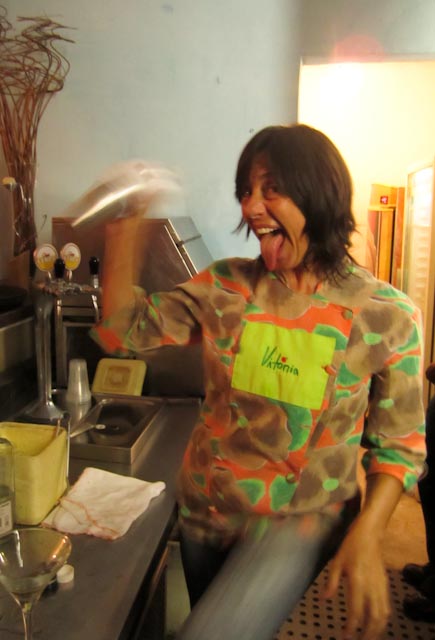
So all this time I had on my hands in Belem was not waste away but rather was spent in good company of my new friends.  As Roselis had to leave for a while to go to a conference of tribal leaders in Manaus I also spent some time with a couple other couchsurfers.  I was hosted by a couchsurfer named Lysmar who was super cool.  He lives with his family, mom, 2 brothers and sister in a very (Belemese) neighborhood.  I also spent some days with Leandro who works with Roselis at The Nature Conservancy and who introduced her to couchsurfing.  Leandro was just as welcoming and open and cool as Roselis and formed an integral part of the little Belemese family that I fell into.  The other family member who I have already mentioned was Simoni who I saw just about every day.  Like a couple of accountants dividing up their restaurant bill we would geek out with restaurant talk…food costs, fickle customers, and the difficulties of training good servers.  Having heard of the legendary martinis from my familie’s restaurant that I used to run in Hollywood she went out and bought the ingredients and we had a Martini Night at her restaurant.


ROSELIS & SIMONI MAKING MARTINIS

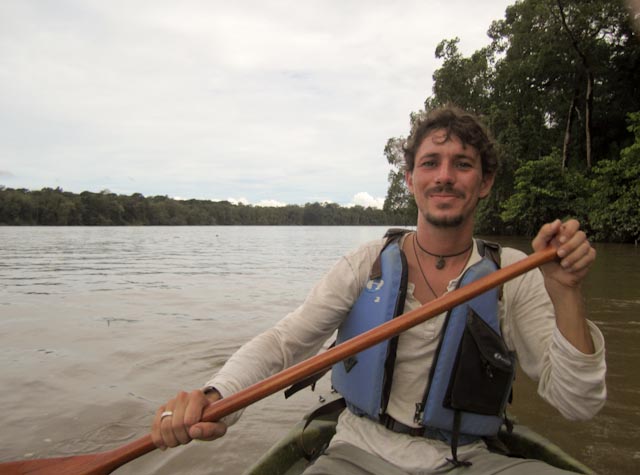
Simoni also invited me to go kayaking in the river one morning (Woohoo!)  So I got to spent the morning kayaking through the amazon basin past mangroves and jungle.  We stopped in a floating restaurant and had an amazing lunch of grilled fish plucked straight from the river.

Hmmm, what else did I do while in Belem…there was a great open air market and free concert in the main square (which was one of the nicest plazas I saw in Brasil).

The main plaza (Praça da República)

A lot of my time in Belem was also spent trying to figure out an adventurous way to reach Colombia.  Someone told me there was a large industrial port in a nearby city so I  actually took a one hour boat ride and a one hour bus ride to reach the port with hopes of getting some commercial ship that would sail along the coast of the Guyanas and Venezuela to Colombia to let me sneak on board and work in exchange for my passage.  Didnt happen 😦  But at least I gave it a good try.  In the end I found a couchsurfer who used his airmiles to buy me a ticket for half the regular price.

And so, thus were the my final days in Brasil…at least until I return in May to conquer the Brasilian Amazon.  I caught a plane to Bogota on May 22nd.  Thanks to my Belemese family…If not for them my three weeks in Belem would have felt like a waste of time, instead it was a time a I will always remember.  So long for now Brasil!

Leandro, Roselis, Me, & Simoni

PS:  In my last post (Farewell to Coco) I forgot to include the map that showed my route.  If you want to check it out click below on the blue link (you can click on the little blue pin markers also for details).  In the end I did 6500 kilometers (over 4,000 miles).  That is just the straight shot route that does not include all the other time and miles I spent driving around in cities, taking wrong turns and othe random detours.

Map of Coco’s Final Route

A Farewell to Coco and Her Friends

So I made the last part of the trip solo and had a good time of it.  I could have made the drive from Sao Luis to Belem in two days and one night but I found myself trying to stretch out every last bit of the drive.  I didn’t want the time with Coco to end.   So I found a random dirt road on the map…one I was sure would slow me down, and headed for it knowing that it would delay me enough so that I would have to spend one more night with Coco before arriving  in the city.

It was almost dark and I had been on this dirt road for an hour and had seen no safe place to pull off and park for the night.  I was beginning to get a little perturbed when I caught myself and decided to think positive, I took a deep breath and visualized myself finding a spot that would be suitable for parking.  And I swear, not 30 seconds later I saw a smaller dirt road that split off the larger one I was on…a promising lead.  So I turn down the road which is flanked on either side by rows and rows of palm trees that evidently used to be a palm plantation but that had been neglected, allowing the jungle to begin retaking what was rightfully hers….

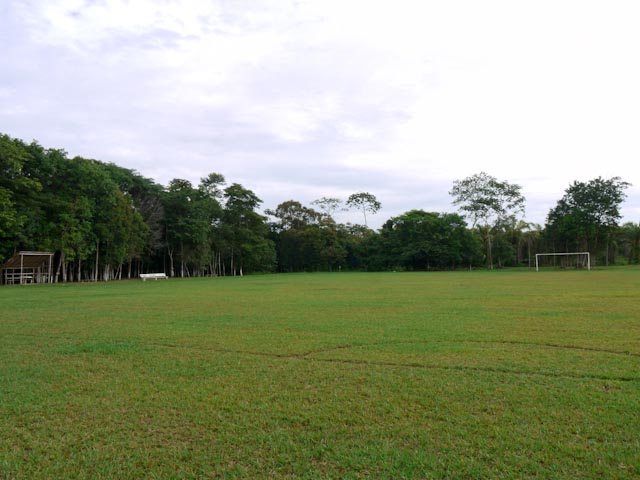
And at the end of the road…I find the PERFECT spot to sleep for the night!  The most random thing ever to find a big well kept soccer field in the middle of nowhere!  Literally the nearest house must have been a kilometer away and the nearest town another 5 kilometers!   So that is how I found Coco’s final camping ground…

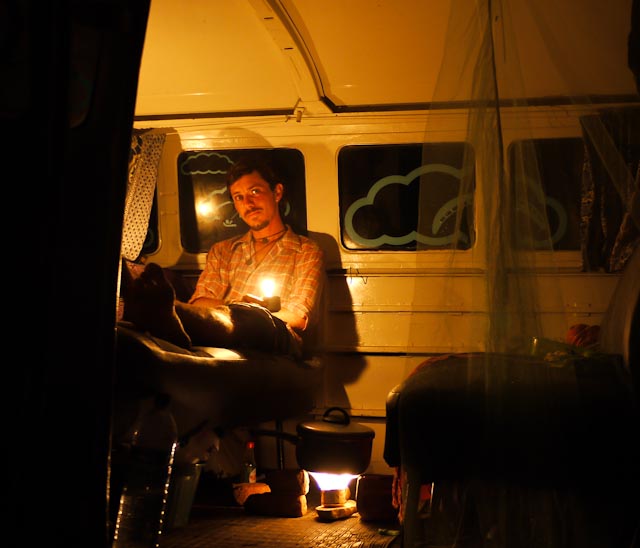
So I spent a pleasant night alone.  Made myself a caipahrina, lit some candles, put on some music and cooked a nice dinner.  I thought about all the things I would miss about life on the road in Brazil, the sunsets, the roadside fruit, waking up to see a new landscape everyday and just the thrill, the feeling of being a foreigner behind the wheel in a strange land, its almost as if you are doing something forbidden, something incredible.  I also thought of all the things I would not miss, the speed bumps, the mango fibers in my teeth, the sweat, the mosquitoes.  And so it was…my last night in Coco.

I made a little video documenting the occasion…not so riveting so feel free to skip it but for those who want to watch it here it is….

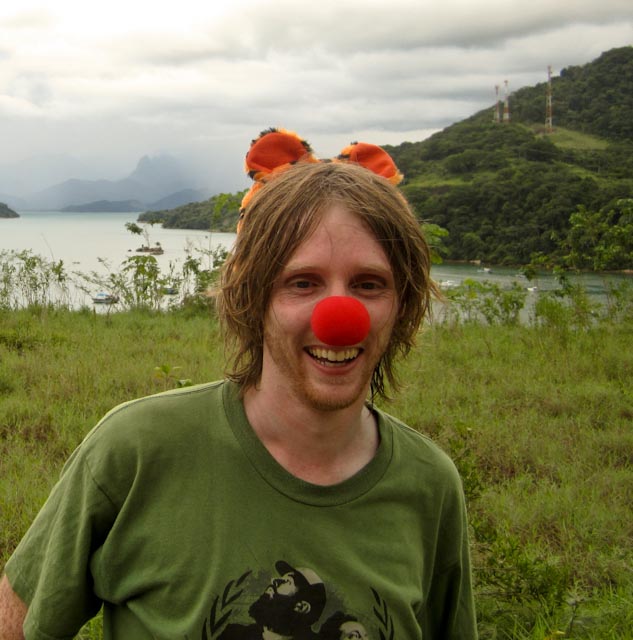
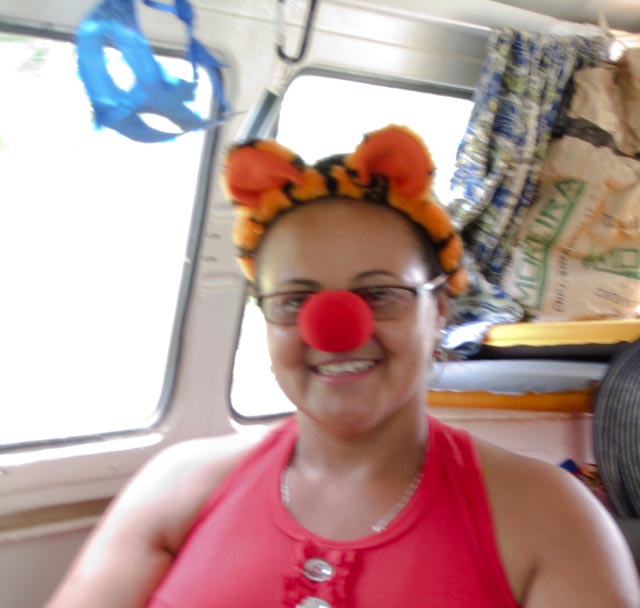
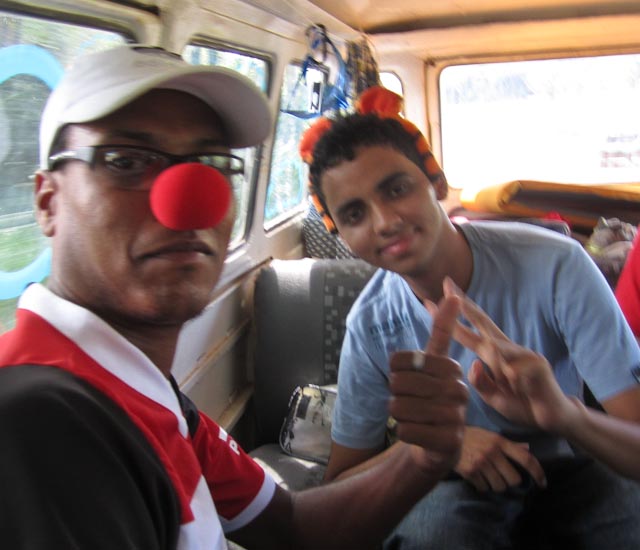
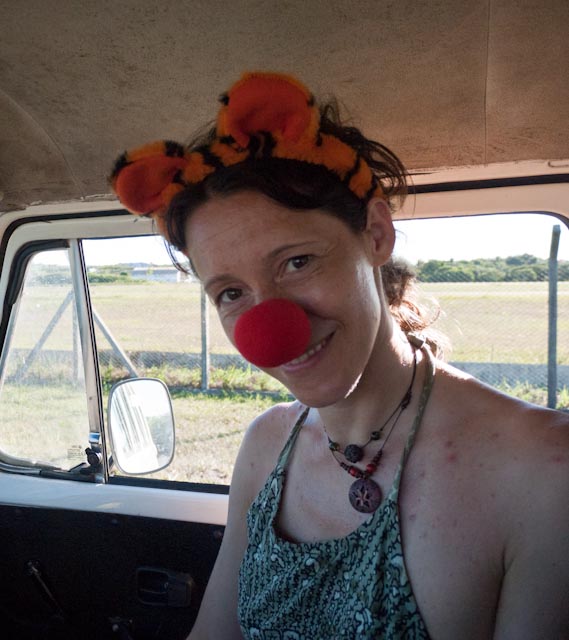
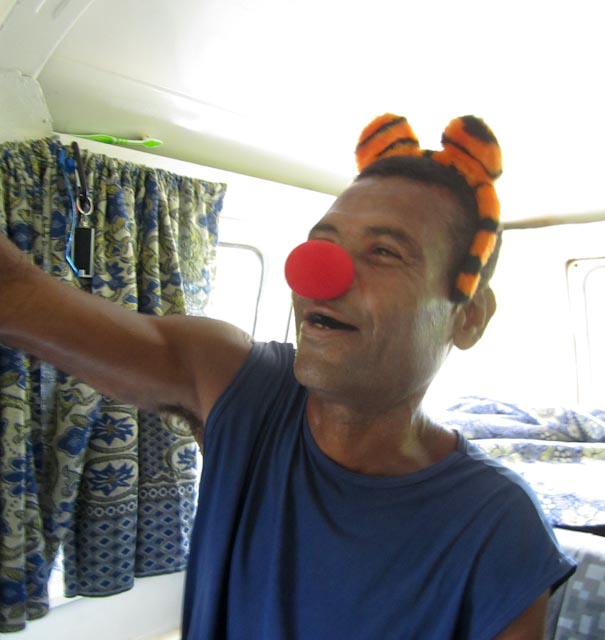
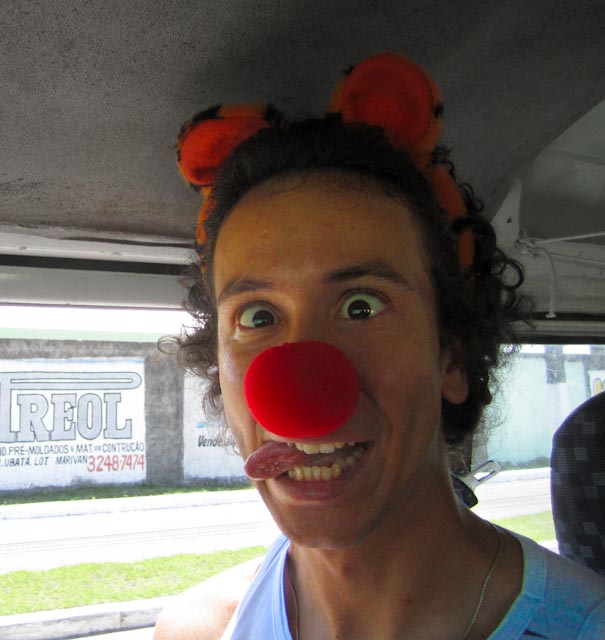
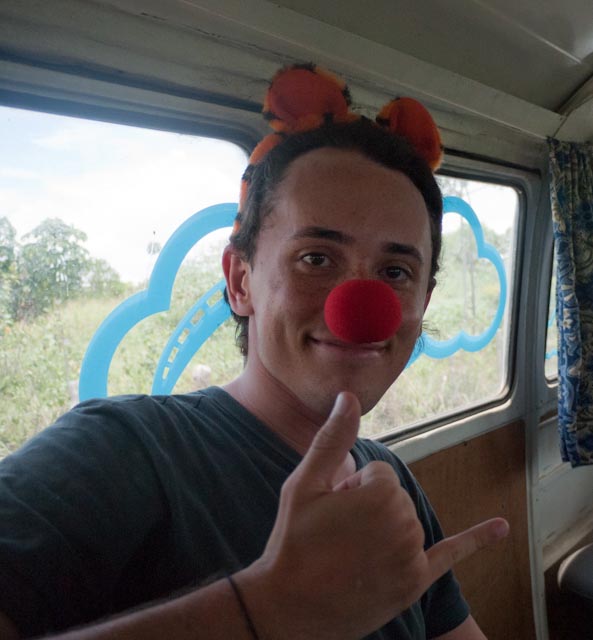
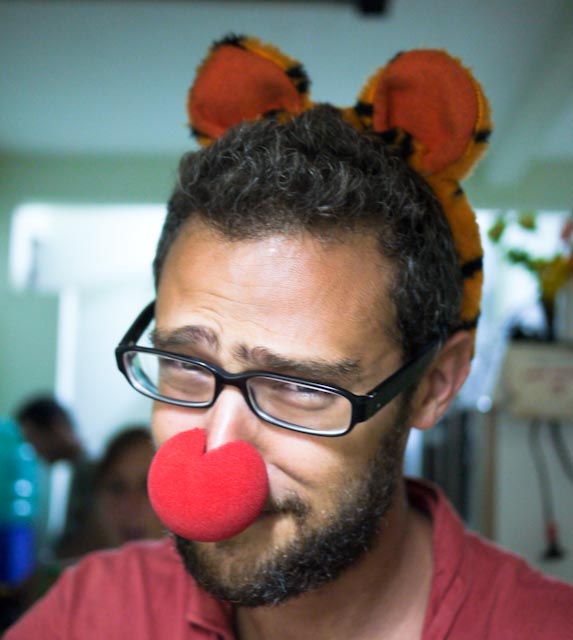
From day one I made a rule that everyone who rode in Coco, even if it were just for one kilometer, had to commemorate the occasion by adorning themselves with tiger ears and a clown nose.  I mentioned in a previous post that I often stopped to pick up random locals on the side of the road who flagged us down thinking that Coco was a transport vehicle.  The locals we picked up were given a choice if they wanted to participate in our “photography project” or not…all but one or two agreed and everyone sported the gear with big smiles, probably wondering how their day had taken such a strange turn to find themselves wearing a clown nose in the back of a Volkswagen bus full of gringos.   These people along with friends, couchsurfers, and other travelers who I randomly met on the road were those lucky enough to float (and bounce) down the highway on Coco’s steel haunches.  Without Coco I probably would never have met or come into contact with most of these people.  And so, a farewell to Coco from all of her friends….

Tchau Coco!

And so, I cruised into a Belem on March 2nd, my final port of call, where a new “adventure” of registering Coco at the Department of Motor Vehicles and passing her off to her new owners would soon begin.